
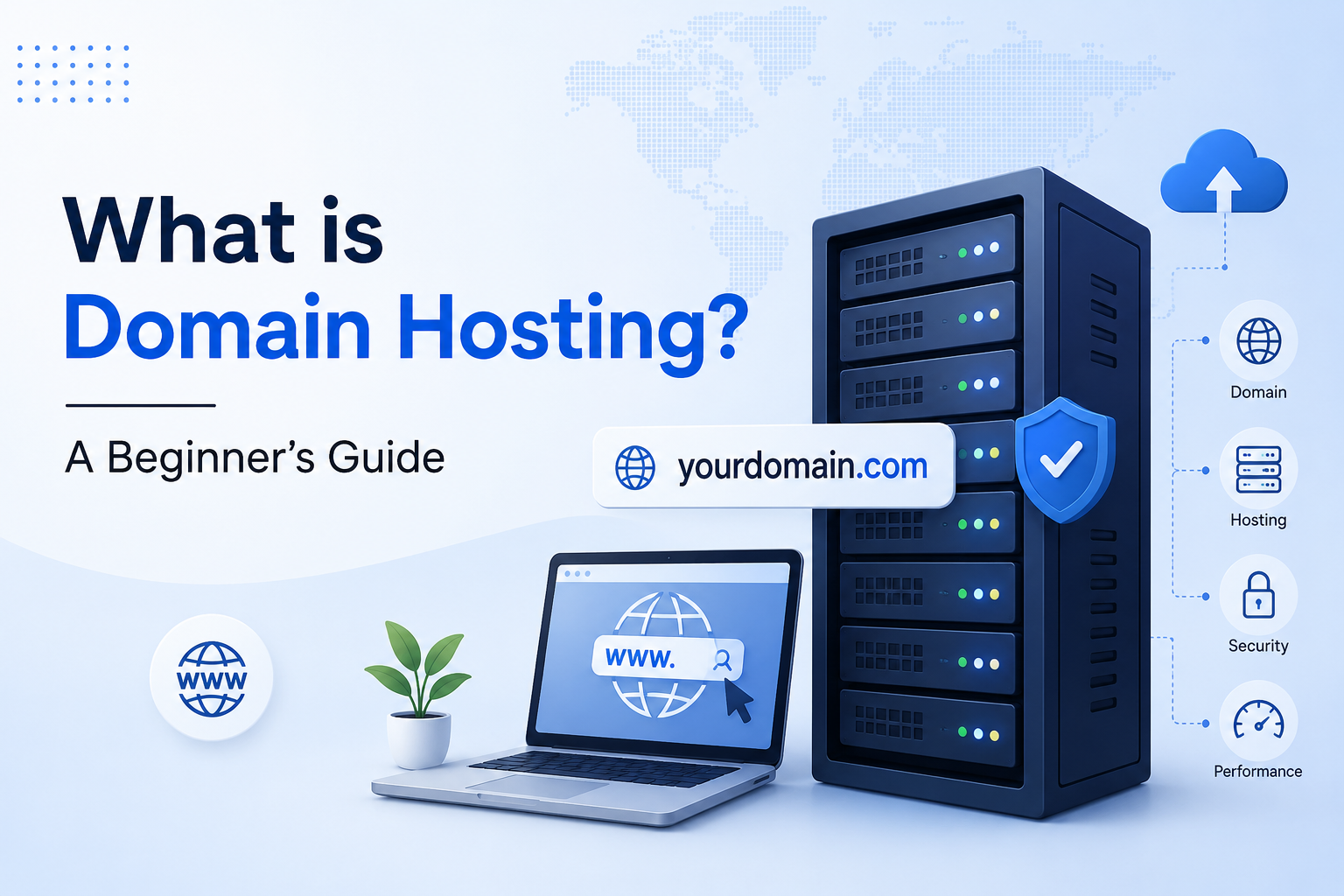
In today’s digital world, having a website is essential for businesses, freelancers, bloggers, and online stores. However, before launching a website, you’ll often hear two important terms: Domain Name and Web Hosting. Many beginners get confused between these concepts. In this guide, we’ll explain domain hosting in simple terms and help you understand why it’s important for your online presence.
Understanding Domain Names
A domain name is your website’s address on the internet. It’s what users type into their browser to visit your website.
For example:
Think of a domain name as your home’s address. Just as people need your address to find your house, internet users need your domain name to find your website.
What is Web Hosting?
Web hosting is the service that stores your website’s files, images, databases, and content on a server connected to the internet.
When someone visits your domain name, the hosting server delivers your website’s content to their device.
Using the home analogy:
- Domain Name = Your Home Address
- Web Hosting = The Actual House
You need both to create a functional website.
What is Domain Hosting?
Many people use the term Domain Hosting to describe the combination of domain registration and web hosting services.
Domain hosting providers typically offer:
- Domain registration
- Web hosting plans
- Email hosting
- SSL certificates
- Website management tools
- Security features
This allows website owners to manage everything from a single platform, making the process easier for beginners.
Why Do You Need Domain Hosting?
Without domain hosting, your website cannot be accessed online. Here are some key benefits:
1. Professional Online Presence
A custom domain like www.yourbusiness.com looks far more professional than a free subdomain.
2. Better Brand Recognition
A unique domain helps customers remember your business and strengthens your brand identity.
3. Website Accessibility
Hosting ensures your website is available to visitors 24/7 from anywhere in the world.
4. Business Email Addresses
Many hosting providers allow you to create professional email addresses such as:
5. Enhanced Security
Modern hosting services include security measures such as SSL certificates, malware protection, and backups.
Types of Web Hosting
There are several hosting options available:
Shared Hosting
Affordable and ideal for beginners or small websites.
VPS Hosting
Offers better performance and more control than shared hosting.
Dedicated Hosting
Provides an entire server for your website, suitable for large businesses.
Cloud Hosting
Uses multiple servers for improved speed, reliability, and scalability.
How to Choose the Right Domain Hosting Provider
Before selecting a provider, consider:
- Uptime reliability
- Website speed
- Customer support
- Security features
- Backup services
- Pricing and renewal costs
- Scalability options
Choosing a trusted hosting provider can significantly impact your website’s performance and user experience.
Final Thoughts
Domain hosting is the foundation of every successful website. While a domain name helps people find your website, web hosting stores and delivers your website’s content to visitors. Understanding the difference between these two elements is crucial for anyone starting their online journey.
Whether you’re creating a business website, blog, portfolio, or e-commerce store, investing in reliable domain hosting ensures your website remains secure, fast, and accessible to your audience. With the right hosting solution, you’ll be well on your way to building a strong and professional online presence.
Need Domain Registration and Reliable Hosting Services? DesignsCtrl provides Domain Registration, Web Hosting, Website Development, Web Maintenance, and Digital Marketing solutions to help businesses grow online. Contact us today to get started!